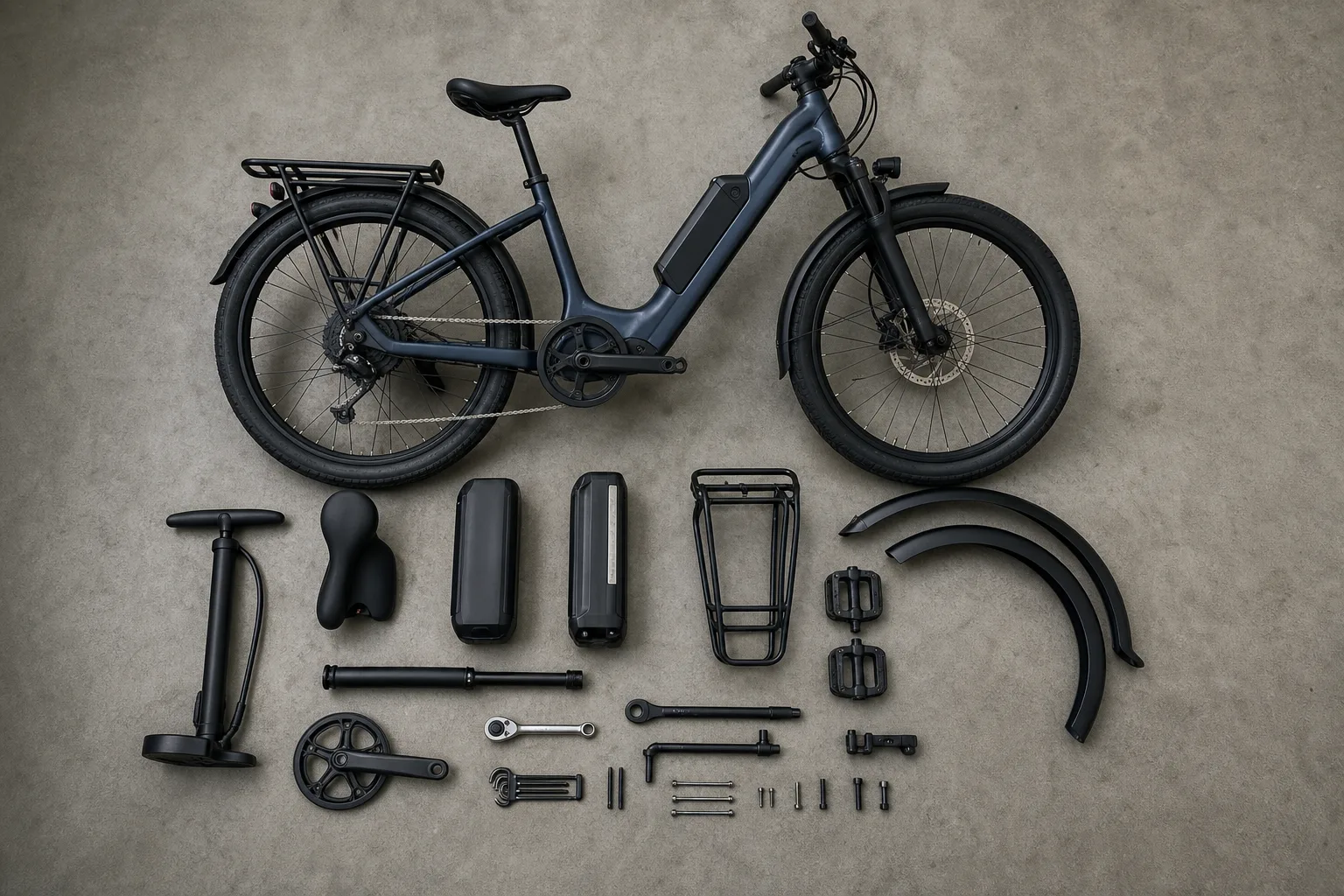
A bike that arrives in a carton is roughly eighty percent assembled, and the remaining twenty percent is the part that stops you. Front wheel, handlebar, stem, sometimes a brake caliper, occasionally the pedals in the wrong order. None of that is difficult work, but all of it is work with a number attached, and the number matters more on a bike that weighs sixty pounds and carries you at twenty miles an hour than it does on a road bike from 1994. What a careful reader checks, before the money moves, is who does that work and who fixes it later.
1. The torque figures on the stem and the brakes are the whole difference
Stem face-plate bolts on a modern e-bike are usually specified somewhere in the range of a few newton meters, low enough that a confident wrist overshoots easily, and brake caliper mounting bolts and rotor bolts have their own figures printed right on the part or in the manual. A mechanic uses a torque wrench because carbon and aluminum both fail quietly when overtightened, and because a rotor bolt that backs out at speed is not a slow failure. If you build the bike yourself, buy the wrench first. If a shop builds it, ask whether the build sheet records the values.
2. The battery mount is the part you cannot source anywhere else
Frames, wheels, tires, chains and saddles are all interchangeable across the industry, which is why a twelve-year-old bike is still repairable. The battery cradle is not. It is molded to that maker's pack, wired to that maker's controller, and keyed to a lock cylinder that only that maker stocks, so a cracked mount or a corroded contact block becomes a parts inquiry rather than a shop fix. Ask what the pack costs today as a spare, and ask whether the same pack fits the model the company sold two years ago. A maker who has kept one mount across generations is telling you something useful.
3. Controllers and displays come from one supplier, and that supplier is the brand
Displays crack, connectors corrode, and controllers fail in ways that present as intermittent cutouts rather than clean deaths. Almost none of these are generic, so a local shop can diagnose the problem, confirm the wiring, and then wait on a box from the brand like everyone else. What separates brands here is not whether parts fail but whether parts ship: some publish a spares catalog with prices and stock, some answer a support ticket in two days, some take three weeks and send the wrong plug. Search for the model plus the word display before you order anything.
4. Who honors the warranty when nobody local sold you the bike
A direct-order warranty is a promise from the manufacturer to you, not to your neighborhood shop, and the shop has no obligation to perform unpaid labor on a bike it did not sell. Some brands run a paid service network and reimburse independent shops at an agreed rate, which works well when it exists. Others ship you the part and expect you to fit it. The Consumer Product Safety Commission is the federal body responsible for bicycle safety requirements, including electric bicycles, and recall notices from it are worth searching by brand name before you buy, because a company's handling of a past recall shows you exactly how it handles obligations.
5. Questions worth asking a local shop before you buy anywhere
Walk in and ask five plain things: do you service this brand, do you service e-bikes you did not sell and at what labor rate, can you get a battery or controller for it, will you do a post-assembly safety check on a carton bike, and what does that cost. The answers cost you nothing and reshape the whole decision. A shop that says yes to the first and third turns a direct-order bike into a serviceable one; a shop that says no is telling you to buy something it stocks, which is often the cheaper path once you count the trips.
The bikes that stay on the road ten years from now will be the ones whose owners knew, on day one, which phone number to call and which parts were single-sourced. Write both down before the box arrives.