At $1,800 a shop bike buys assembly, a fitting and a warranty someone local honours; ordering direct saves about $600 and hands you a box
A bike that doesn't fit costs you in a specific, predictable way: you ride it less, you sell it for roughly half what you paid, and you spend a few hundred dollars on stems, seatposts and shorter cranks trying to fix geometry that was wrong when it left the factory. Motor brand almost never causes that outcome. Standover height, reach and saddle position cause it constantly, and they're the three measurements most buyers skip because the spec sheet doesn't lead with them. A 500-watt hub motor on a frame you can't straddle is a bad purchase. A modest mid-drive on a frame that fits is a bike you'll actually use on a Tuesday.
What a bad fit actually costs, in dollars and in trips not taken
Consider the arithmetic before the anatomy. An everyday electric bike is a real expenditure, and the resale market for used e-bikes is thin, picky about battery age, and unforgiving of anything sold in a hurry. If the frame is too long, the fixes are a shorter stem, a setback-free seatpost, sometimes narrower bars, and each one changes handling in ways you didn't ask for. If the standover is too tall, there is no fix at all. You can lower the saddle, but you cannot lower the top tube, and a bike you have to lean sideways to dismount is a bike that stays in the garage on wet mornings and short errands, which are exactly the trips that justified buying it.
Measuring your inseam and reach at home, with a book and a wall
Take your shoes off, stand with your back flat against a wall, and pull a hardcover book up between your legs until it sits firm against your crotch, the way a saddle would. Have someone mark the top edge of the book's spine on the wall, then measure from that mark straight down to the floor. That number is your cycling inseam, and it is usually an inch or two shorter than your pants size suggests. Subtract about an inch for a road-going frame and you have the maximum standover height you can clear in shoes, flat-footed, without stretching.
Reach is harder to measure alone but easy to approximate. Sit on a firm chair, hold your arms out at a comfortable angle with a slight bend at the elbow, and have someone measure from the notch at the base of your throat to your fingertips. Compare that to your inseam. If your torso and arms are short relative to your legs, a frame sized purely by seat tube length will stretch you forward, and you'll feel it in your hands and neck by mile three. Manufacturers publish reach and effective top tube length. Those two numbers, not the size label, are what you compare between brands.
Why step-through and mid-step frames exist
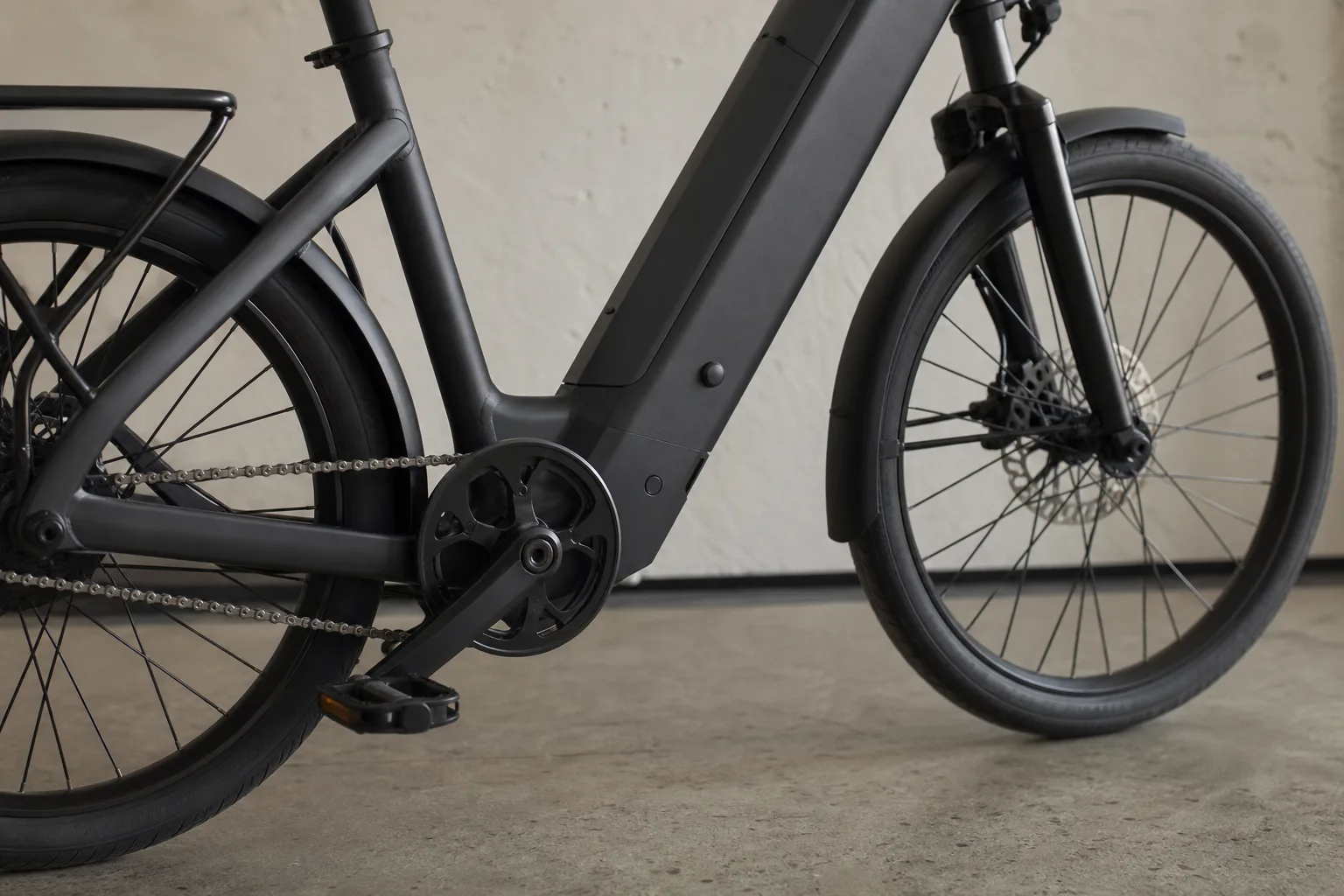
The step-through frame is not a concession, and it was never about skirts in any meaningful modern sense. It's a structural answer to a real problem: electric bikes are heavy, often fifty to seventy pounds, and swinging a leg over a loaded rear rack while balancing that weight is the single most common way riders drop a bike in a driveway. A low or absent top tube lets you step into the frame, plant both feet, and settle onto the saddle before anything is moving. Mid-step frames split the difference, keeping a sloping top tube for stiffness while dropping the standover several inches, which matters if you're carrying groceries on the back and stopping at four intersections per mile.
Anyone shopping specifically for an electric bike for women will find that most of what distinguishes those models is exactly this: lower standover, shorter reach, narrower handlebars and a saddle shaped for wider sit bones. The motor is usually identical to the unisex version. Judge the frame, not the label on the collection page, because plenty of riders are best served by a model marketed the other way.
The parking lot test, in about four minutes
Straddle the bike flat-footed with both feet on the ground before you turn anything on. You want an inch or two of clear air between you and the top tube, in the shoes you'll ride in. Then sit on the saddle and put one foot on the pedal at the bottom of its stroke: your knee should be slightly bent, not locked, and if the seatpost is already near its maximum insertion line the frame is too big for you regardless of what the size chart says. Now look at your hands. If you're reaching forward with straight elbows or your shoulders feel pulled, the cockpit is long. The U.S. Consumer Product Safety Commission oversees bicycle safety requirements, and reflectors and brakes will meet them on any bike in the shop, but no regulation covers whether a frame suits your body.
Roll it, slowly, and stop hard once. Come to a complete halt and put a foot down without thinking about it. If you had to shift your weight sideways or tip the bike toward the curb, that motion repeats at every stop sign you'll ever encounter, and it gets worse when a pannier is loaded. A bike that passes this test with a smaller battery is a better everyday bike than one that fails it with a bigger one.
Write your inseam and your reach measurement on your phone before you visit a shop, and ask for the geometry chart rather than the size label. The frames that clear both numbers become your short list, and only then does it make sense to compare motors, batteries and what the whole thing weighs when you lift it up a curb.